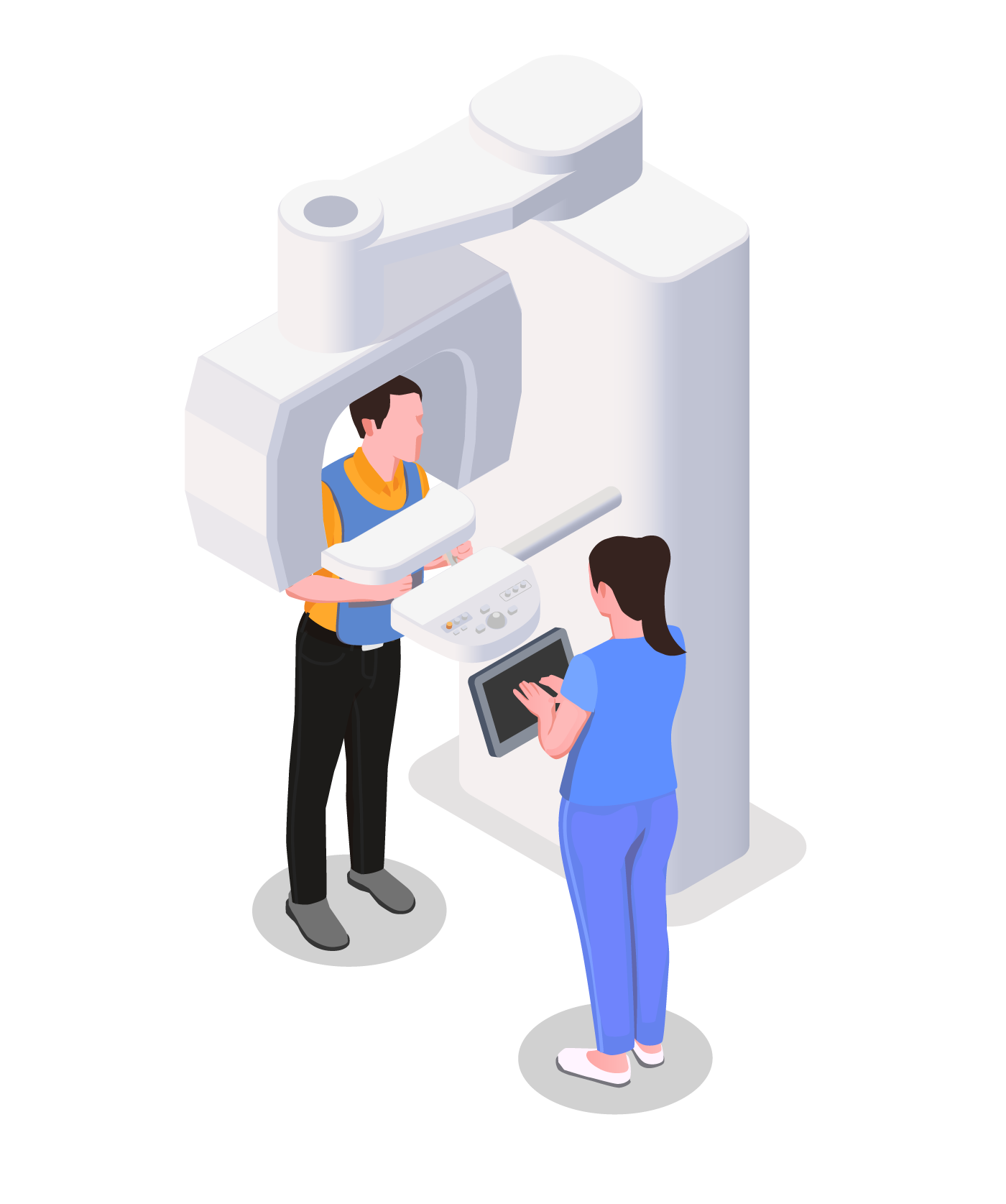
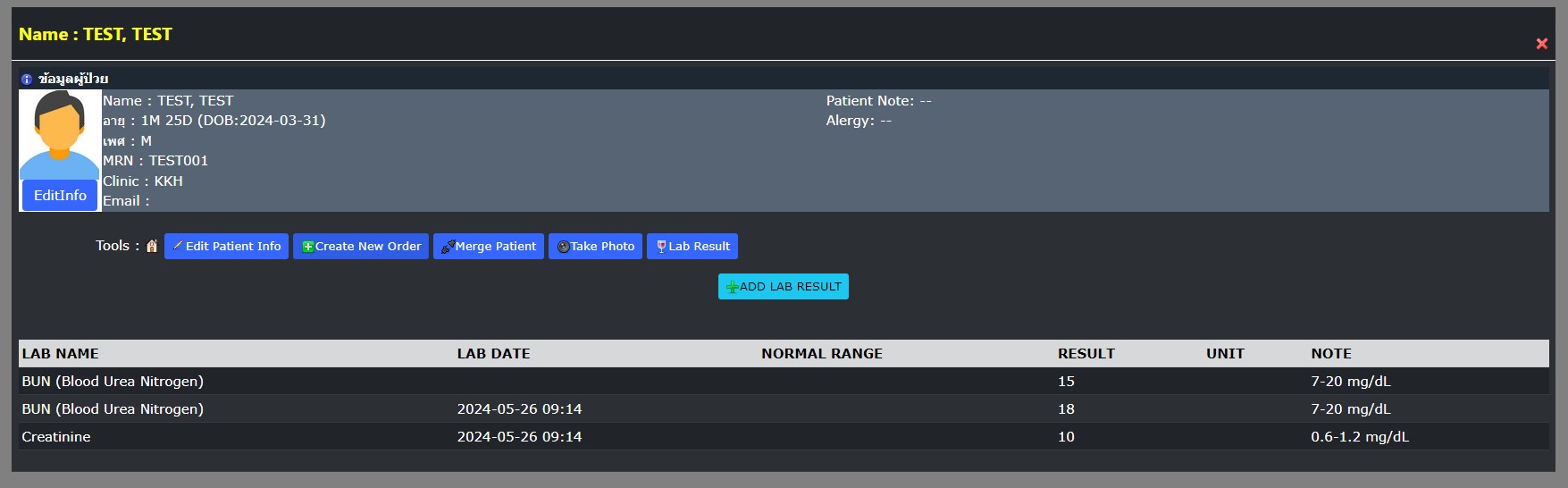
A Radiology Information System (RIS) is a networked software system for managing medical imagery and associated data. ThaiRIS is especially useful for tracking radiology imaging orders and billing information, and is often used in conjunction with Picture Archiving and Communication Systems (PACS) and VNAs to manage record-keeping, billing, and workflow.
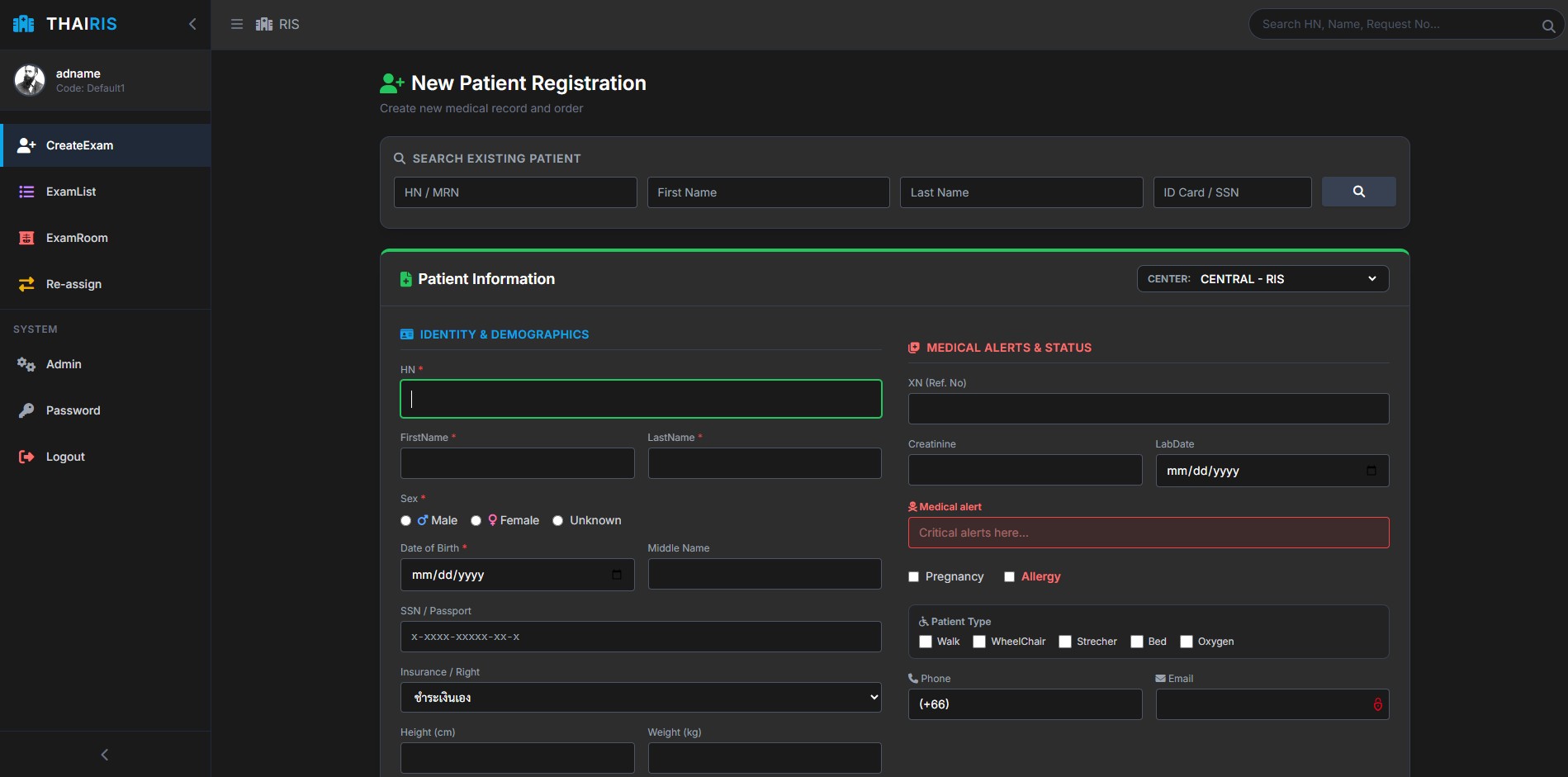
Patient Management
Scheduling
Result Entry
Reporting & Billing
Radiology Workflow
Optimized processes for Hospital and Tele-Radiology environments
Standard
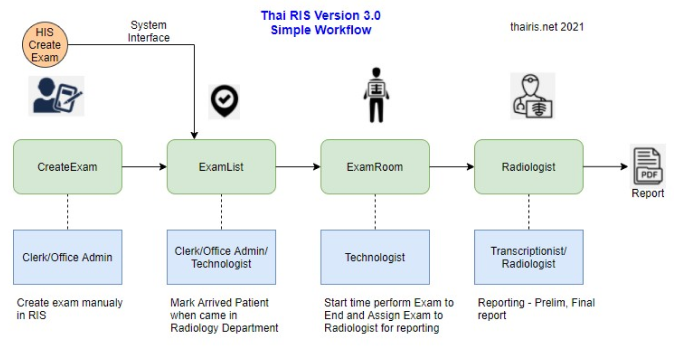
RIS Simple Workflow
Typical workflow within a single hospital or clinic.
Tele-Radiology
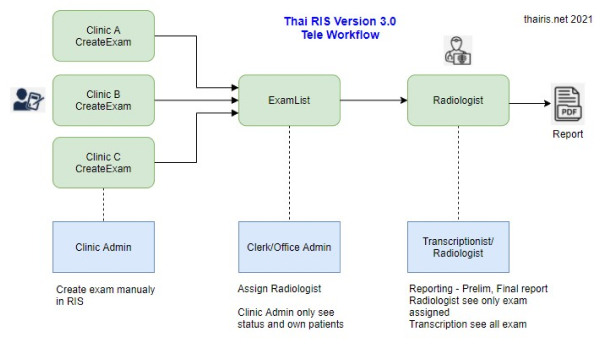
RIS Tele-Radiology Workflow
Workflow for remote reading and multi-site management.
Astromud ✰
Astromud demands a new ethic: . When you walk on a muddy trail, you are walking on a billion years of biocatalytic refinement. The clay that squelches under your boot once helped assemble the first nucleotides. The anaerobic bacteria in that black mud are your unbroken lineage back to the last universal common ancestor. To destroy mud is to destroy the manuscript of evolution.
In space exploration, the principle of planetary protection already cautions against contaminating other worlds with terrestrial microbes. But an Astromud ethic goes further: it says that any mud-bearing world — even without active life — is a potential paleontological treasure, a chemical library of prebiotic experiments. We have no right to drill, melt, or oxidize it without the most profound reverence. The word “astronaut” means star-sailor. But we are not voyagers from above. We are mud that learned to stand up, to wash itself, and to point at the lights in the sky. Every rocket launch is a filament of mud — aluminum from bauxite, fuel from ancient plankton, circuitry from silica and copper — briefly escaping its native gravity. astromud
Neurophilosophy has long favored clean metaphors: the brain as computer, the neuron as switch, the mind as software. But a more honest metaphor is Astromud. Your memories are not files but crystallization patterns in a dynamic gel. Your moods are not errors but chemical gradients responding to planetary rhythms. And your sense of self is a temporary eddy in the electrochemical flow of a deep-time biological sludge. Astromud demands a new ethic:
Astromud is the universe’s memory. It is where heavy elements forged in supernovae learn to combine into molecules, where molecules learn to become metabolisms, and where metabolisms learn to look back at the stars that made them. Every grain of mud on Earth contains a ghost. The iron in your garden soil was born in the core of a massive star before it detonated. The carbon in the humus was cooked in a red giant’s helium shell. The phosphorus and calcium — so crucial for ATP and bone — came from less common nucleosynthetic pathways, scattered by rare cosmic collisions. The anaerobic bacteria in that black mud are
The next time you see a puddle after rain, or dig a garden, or wipe a smudge from your skin, pause. You are touching the same substance that brewed the first life, that holds the fossil of the last extinction, and that may, on a thousand other worlds, be slowly dreaming of eyes to see the stars.
Supported Integrations & Viewers
Development Roadmap & Log
Comming Soon: ThaiRIS 5.0
We are working on the next major version with enhanced AI integration and cloud capabilities.
15 June 2024 - Free Version 1.8 Released
Free Version 1.8 OpenSource Uploaded to Github. Download Here