
Extra Speed Michaela Guys Dad Pretends To Leave And Hides In Bathroom Direct
At its core, the video’s genius lies in its title: Extra Speed Michaela . The phrase is not a description but a command—a cheat code activated by the father’s disembodied voice. The "extra speed" refers to the frantic, high-octane panic that overtakes the children the moment they believe the adult has abandoned them. We watch as Michaela’s composed demeanor shatters into a whirlwind of screaming, door-locking, and desperate strategizing. The father, hidden in the bathroom (a room symbolizing privacy, vulnerability, and cleansing), becomes an invisible puppeteer. His voice, crackling through the walkie-talkie, transforms from a tool of communication into a weapon of psychological manipulation. He is not just a spectator; he is the director, and the bathroom is his booth.
Furthermore, the video functions as a masterclass in rhythmic tension. The "extra speed" command is a narrative accelerant. It mimics the logic of a video game, where a power-up increases velocity and reduces reaction time. Michaela’s subsequent actions—locking doors, barricading, shouting—are not random; they are a choreography of controlled hysteria. The humor derives from the mismatch between the high stakes (abandonment) and the low setting (a suburban living room). The father’s calm, tinny voice urging "extra speed" contrasts jarringly with Michaela’s escalating screams. This audio-visual dissonance is the signature of the genre: the adult’s godlike detachment versus the child’s mortal terror. At its core, the video’s genius lies in
In conclusion, the "Extra Speed Michaela" video is far more than disposable internet fluff. It is a tightly constructed three-act play compressed into sixty seconds: the setup (the feigned departure), the complication (the hiding), and the frantic resolution (the "extra speed" panic). The bathroom serves as the hidden engine of the joke—a symbolic space where the parent sheds his nurturing role and temporarily becomes a trickster god. The video works because it taps into a universal childhood fear while simultaneously reassuring us (through the father’s omnipresent voice) that safety is never truly gone. It is hidden, yes, but only behind a thin, unlocked bathroom door. And in that tension between terror and security lies the essence of all great comedy. We watch as Michaela’s composed demeanor shatters into
In the sprawling, chaotic ecosystem of TikTok, few genres are as enduring or as beloved as the staged family prank. Among these, a specific 2023 video—colloquially known as the "Extra Speed Michaela" video—achieved a unique form of digital immortality. The premise is deceptively simple: a young girl named Michaela, a boy (presumably a friend or sibling) named Michael, and Michaela’s father. The father pretends to leave the house in a huff, only to hide in the bathroom and amplify the resulting chaos through a walkie-talkie. On its surface, this is a low-budget, juvenile skit. Yet, upon closer examination, it becomes a rich text for exploring themes of performative anxiety, the weaponization of parental authority, and the architecture of a perfect viral joke. He is not just a spectator; he is
The essay’s analytical power emerges from the duality of the father’s role. On one hand, he performs the ultimate parental betrayal: the feigned abandonment. For a child, the threat of a parent leaving is a primal fear, tapping into survival instincts. By hiding, he exploits that vulnerability for comedic effect. On the other hand, his physical presence in the bathroom—a room he never actually leaves—represents a twisted form of protection. He is absent and present simultaneously. This paradox is the engine of the comedy. The children’s panic is real to them, but the audience knows it is a controlled demolition. The bathroom becomes a liminal space: neither inside the family drama nor outside of it, a confessional booth where the father witnesses the confession of his child’s fear without offering absolution.
Critically, the "Extra Speed Michaela" video endures because it is not cruel; it is recognizable . Nearly every viewer has felt the panic of a perceived parental absence, whether in a grocery store aisle or a crowded mall. The father’s prank merely externalizes that internal monologue. By hiding in the bathroom, he inverts the typical parent-child dynamic. Usually, the child hides from the parent (playing peekaboo, seeking autonomy). Here, the parent hides from the child, but with the terrifying power of observation. The bathroom, a place of solitude, becomes a panopticon. The father sees all, but is seen by none.

Hola, muy buen post. Me sirvió mucho. Eso si, creo que hayun pequeño error de tipeo:
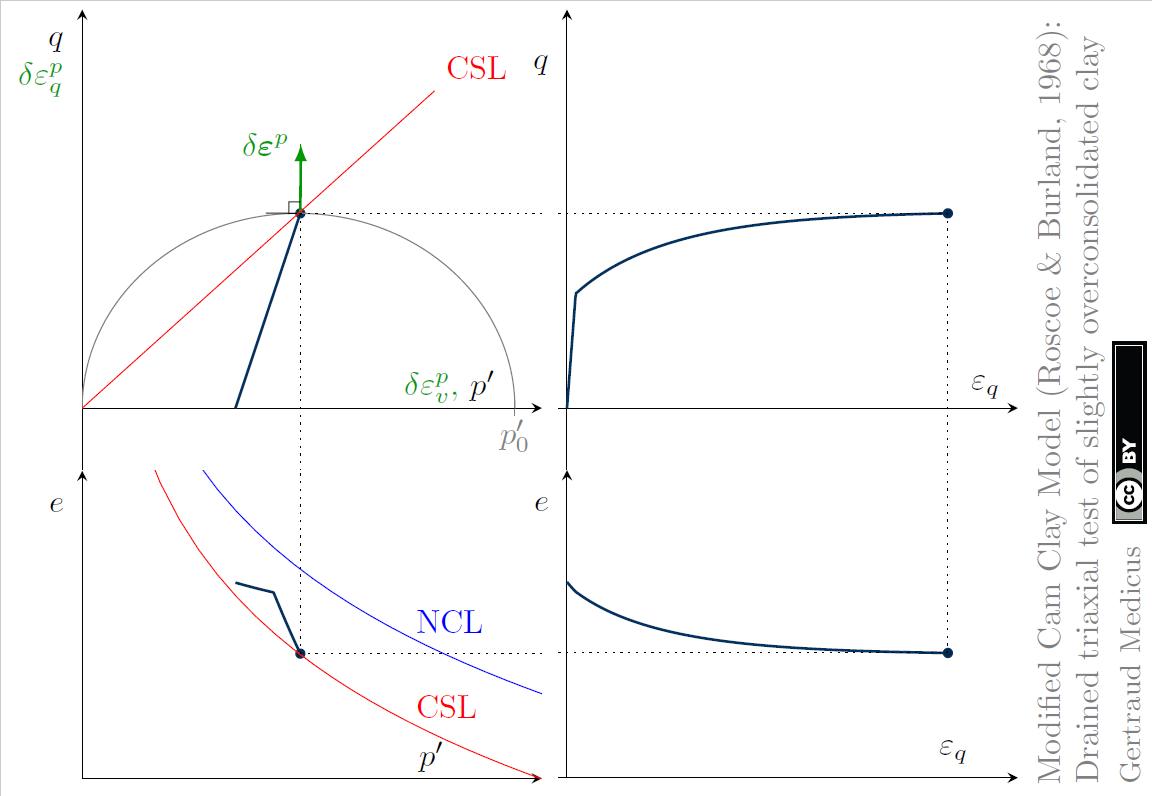
“Contractivos (Δu>1): Tienden a consolidar. Se da en suelos sueltos y arcillas normalmente consolidadas (NC).
Dilatante (Δu0y Δu<0 cierto??
Gracias
Hola, Esteban
Me alegro que te haya servido. En este caso no hay un error, en los suelos contractivos, cuando se ejerce la carga aumentan las presiones de poro. Al revés con los dilatantes.
Saludos.
Creo que se refiere a que en la imagen el valor critico para la dilatancia o contraccion es el 0 y luego en el texto es 1.
Eso si, muy buen post, simple dentro de lo complejo.
Hola, Benjamin.
Es cierto que se contradice. Lo reviso, gracias!
Buenos días,
Como se determinan las presiones de cámara en un ensayo triaxial CD, cuando de van a ensayar las 3 probetas? Cual es proporción de incremento adecuada entre cada una de esas presiones? Gracias
Hola, pues eso depende de tu proyecto.
Hay que preguntarse en qué condiciones estará sometido el suelo durante la construcción y la puesta en servicio.
Normalmente la primera es la actualmente tiene in situ, en función de su profundidad. La tercera sería las condiciones de servicio, por ejemplo, cuando construyamos la presa o el terraplen, o entre en carga la cimentación. La segunda, pues uno intermedio.
Saludos.
Ignacio
Gracias amigo. Solo me ha quedado una duda con el ensayo UU. En el blog mencionas que debe saturarse primero. Me parece que esa no es una condición estrictamente valida, ya que se entiende que el ensayo rápido no da tiempo para que el material sature, como ejemplo puede ser el realizar el ensayo UU y representar que sucederia si estas construyendo un dique y necesitas saber las condiciones de estabilidad. Sin embargo, el saturar la muestra, y luego ensayarla te podria dar valores menores de parámetros de resistencia cortante y utilizar ello para tu análisis y ser conservador. Yo considero que antes de realizar un ensayo es importante comprender como se va comportar el suelo y en función a ello desarrollar el análisis. Muchas gracias por tu blog, me he tomado el tiempo de leer, me quedan algunos pasos por profundizar pero muy bueno.
Martin, es necesario saturar el material de lo contrario va a haber efectos de succión que no pueden ser medidos y no es posible generar el analisis de esfuerzos efectivos que se necesita para determinar los valores de resistencia.
Hola Nacho, para mi este ensayo es muy importante y hay cosas que se hacen por costumbre pero que se pueden cambiar a mejor. Me explico, la presión de poro, por ejemplo, siempre se puede medir en la célula triaxial tanto si se hace un ensayo UU, como uno CD, el asunto radica en configurar el equipo y los sensores convenientemente.
Para mí, si cuando se hace un triaxial se le diera al cliente los datos de los sensores además de las curvas de rotura, el cliente podría comprobar si el ensayo realmente es UU o CD ya que muchas veces la elección de velocidades de rotura no son correctas, la nuestra drena mal por lo que sea, etc.
En resumen, este ensayo tan importante debe realizarse por técnicos especializados tanto en laboratorio, como en cálculo de resultados.
La formación es muy importante!!!