Enhanced/Dual Powered
Willem EPROM Programmer
User Guide
Main Board / Cables
Main Board PCB3.5
Main Board PCB4E

Main Board PCB5.0

Main Board PCB5.5C

|
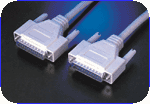
Parallel Data Cable (Printer extension cable, with male-female 25 pin connector, and pin to pin through) |
A-A type USB cable(for power) |
|
|
|
Optional Items:
|
ATMEL 89 Adapter |
ATMEL PLCC 44 Adapter |
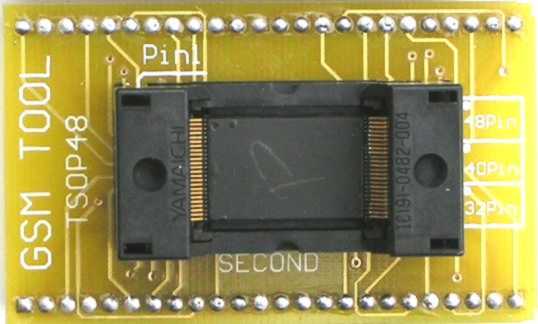
TSOP 48 Adapter |
|
|
|
|
|
FWH/HUB PLCC32Adapter |
PLCC32 Adapter |
SOIC Adapter(Simplified) |
|
On-Board |
On-Board |
|
|
AC or DC Power Adapter (9V or 12V, 200mA) |
SOIC Adapter(Professional) |
|
|
|
|
|
Abstract As organizations increasingly rely on remote access to network devices, servers, and cloud infrastructure, the security of terminal emulation software becomes critical. Secure CRT, developed by VanDyke Software, is a widely used SSH, Telnet, and serial client. Version 8 introduced several significant security improvements, including stronger cryptographic defaults, enhanced key management, FIPS 140-2 compliance, and improved session logging security. This paper analyzes the security architecture of Secure CRT 8, compares it with prior versions, and provides actionable best practices for secure deployment. 1. Introduction Terminal emulators are a foundational tool for system administrators, network engineers, and security professionals. They provide command-line access to remote systems. However, insecure terminal software can expose credentials, session data, and command history to attackers. Secure CRT has long been recognized for its robust SSH implementation. Version 8 (released in 2018) marked a major update with a focus on modern cryptographic standards and enterprise security requirements.
[SSH2] Host Key Algorithm=ssh-ed25519,ecdsa-sha2-nistp256 Encryption=aes256-gcm,aes256-ctr MAC=hmac-sha2-256 Compression=no Authentication=publickey,keyboard-interactive Disable Password Storage=yes FIPS Mode=yes | Feature | Secure CRT 8 | PuTTY | MobaXterm | OpenSSH (CLI) | |---------|--------------|-------|-----------|----------------| | GUI Session Manager | Yes | No | Yes | No | | FIPS 140-2 Mode | Yes | No | No | Yes (custom compile) | | Encrypted Logs | Yes | No | Limited | No | | Hardware Key Support | Yes | Limited | No | Yes | | Scripting Security | VBScript/Python with permission prompts | No | Yes (weak sandbox) | Native | secure crt 8
| Threat | Mitigation in Secure CRT 8 | |--------|-----------------------------| | Man-in-the-middle (MITM) | Host key verification with SHA-256 fingerprints; optional PKI-based host certs | | Replay attacks | SSH2 sequence numbers and session ID | | Session sniffing | Mandatory encryption (no Telnet without warning) | | Key theft | Encrypted key storage, optional TPM/HSM support | | Log tampering | Integrity checks and encrypted logs | | Malicious session logging | User-configurable log redaction | Abstract As organizations increasingly rely on remote access
Hardware Installation & Configuration
|
Installation Steps
(Note: the LPT port of PC MUST set to ECP or ECP+EPP during BIOS setup. To enter the BIOS setting mode, you need press "Del" key or "F1" key during the computer selftest, which is the moment of computer just power up.)
Software Version To Use | |||
| |||
|
| |||
|
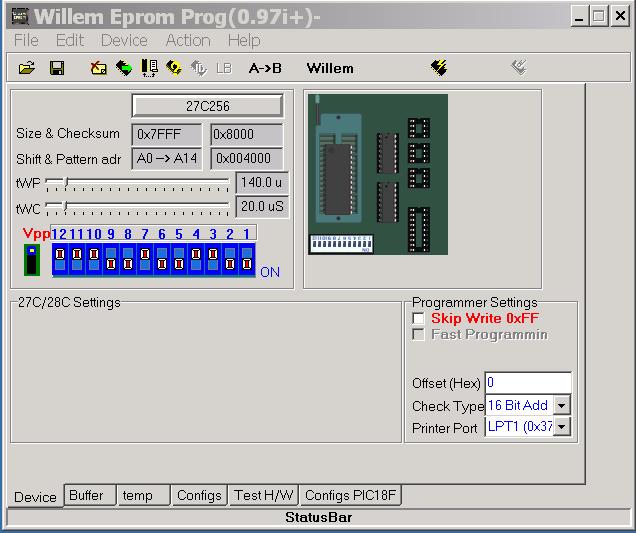
The software interface:
| |||
|
| |||
|
Hardware
Check
| |||
|
PCB3.5/PCB4E
PCB5.0
PCB5.5C
Note: the Vcc setting jumper only has effect when you are using AC adaptor as power source. For the USB power only 5V Vcc is available. For the PCB5.5C, set DIP steps: 1. press DIP Set button twice to check current DIP bit position. Then set it again for ON or OFF. 2. press DIP Bit shift button to shift the DIP bit position to where need to set. And then press DIP Set button twice to check current DIP bit position. Then set it again for ON or OFF. 3. Repeat those steps till all DIP bit ae set same as software indicated. For PCB5.5C voltage and Special chip selection: 1. Put back the safety jumper. 2. Press the voltage button and hold for 1 second, the voltage LED should move to next. Repeat till desired voltage LED light up. 3. Press the chip selection button and hold for 1 second, the chip LED should move to next. Repeat till desired LED light up. 4. Remove the safety jumper to lock the selected voltage and chip selection
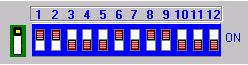
DIP Switch (PCB3.5, PCB5.0)
When programming one chip, follow the program prompt to set DIP switch .
|
Abstract As organizations increasingly rely on remote access to network devices, servers, and cloud infrastructure, the security of terminal emulation software becomes critical. Secure CRT, developed by VanDyke Software, is a widely used SSH, Telnet, and serial client. Version 8 introduced several significant security improvements, including stronger cryptographic defaults, enhanced key management, FIPS 140-2 compliance, and improved session logging security. This paper analyzes the security architecture of Secure CRT 8, compares it with prior versions, and provides actionable best practices for secure deployment. 1. Introduction Terminal emulators are a foundational tool for system administrators, network engineers, and security professionals. They provide command-line access to remote systems. However, insecure terminal software can expose credentials, session data, and command history to attackers. Secure CRT has long been recognized for its robust SSH implementation. Version 8 (released in 2018) marked a major update with a focus on modern cryptographic standards and enterprise security requirements.
[SSH2] Host Key Algorithm=ssh-ed25519,ecdsa-sha2-nistp256 Encryption=aes256-gcm,aes256-ctr MAC=hmac-sha2-256 Compression=no Authentication=publickey,keyboard-interactive Disable Password Storage=yes FIPS Mode=yes | Feature | Secure CRT 8 | PuTTY | MobaXterm | OpenSSH (CLI) | |---------|--------------|-------|-----------|----------------| | GUI Session Manager | Yes | No | Yes | No | | FIPS 140-2 Mode | Yes | No | No | Yes (custom compile) | | Encrypted Logs | Yes | No | Limited | No | | Hardware Key Support | Yes | Limited | No | Yes | | Scripting Security | VBScript/Python with permission prompts | No | Yes (weak sandbox) | Native |
| Threat | Mitigation in Secure CRT 8 | |--------|-----------------------------| | Man-in-the-middle (MITM) | Host key verification with SHA-256 fingerprints; optional PKI-based host certs | | Replay attacks | SSH2 sequence numbers and session ID | | Session sniffing | Mandatory encryption (no Telnet without warning) | | Key theft | Encrypted key storage, optional TPM/HSM support | | Log tampering | Integrity checks and encrypted logs | | Malicious session logging | User-configurable log redaction |