She opened Chapter 3, “Electrochemical Cells.” The first problem asked for the standard potential of a galvanic cell consisting of a copper electrode in a 0.1 M CuSO₄ solution and a zinc electrode in a 0.01 M ZnSO₄ solution. Lina scribbled:
Students accessed the manual through a secure portal. When they attempted a problem, the system displayed their solution, offered hints, and—if they made a mistake—provided a personalized explanation that referenced the most recent research, their own prior attempts, and even suggested supplementary videos. Solucionario Fisicoquimica Maron And Prutton -UPD-
The manual flickered, and a new line materialized: Remember to apply the Nernst equation for non‑standard concentrations. [ E = E^\circ_{\text{cell}} - \frac{0.0592}{n}\log\frac{[\text{Cu}^{2+}]}{[\text{Zn}^{2+}]} = 1.10\ \text{V} - \frac{0.0592}{2}\log\frac{0.1}{0.01} \approx 1.08\ \text{V} ] A soft chime sounded, and a tiny annotation appeared at the bottom of the page: Update 2.2 (12 April 2026): Added a note on temperature dependence of the Nernst constant. Lina realized the manual was not just a static answer key. It was a living document, rewriting itself to incorporate the latest scientific consensus, corrections, and even the student’s own attempts. 4. A Hidden Message After a week of using the book, Lina noticed a pattern. Every time she solved a problem correctly, the margin would display a faint alphanumeric string—something like “XJ‑9A‑42.” When she solved a problem incorrectly, the string was longer and seemed to encode an error message. She opened Chapter 3, “Electrochemical Cells
And somewhere, a new student, clutching a coffee‑stained notebook, opens the digital portal, types in the first line of a thermodynamics problem, and watches as the screen lights up with a response that is both answer and conversation . The story continues, one equation at a time. The manual flickered, and a new line materialized:
Lina, now a graduate teaching assistant, walked into the lecture hall with a stack of printed copies of the old leather‑bound manual. She placed them on the front desk and addressed the class: “What you see here is a relic of a bold experiment—a book that could think. It taught us not only chemistry, but also the responsibility we have when we give knowledge the power to adapt. Let’s honor its spirit by using the tools we now have responsibly, always remembering that the best learning happens when we stay curious, question everything, and keep the dialogue alive between mind and matter.” The students stared, some in awe, others in bewildered amusement, but all felt the weight of a new era of education humming softly in the air—an era where a solution manual could grow with its readers, just as the universe of chemistry expands with every new discovery. In a quiet corner of the university library, the original “Solucionario Fisicoquimica Maron and Prutton – UPD‑” sits in a glass case. Occasionally, a faint silver script dances across its pages, as if the book itself is still solving problems—perhaps those no longer written in ink, but in the collective curiosity of all who have ever turned its pages.
She took a deep breath and answered: “Let’s keep it, but only if we publish a full report on how it works, open‑source the code that drives the updates, and give every student a clear consent form. Knowledge should empower, not control.” Dr. Singh smiled, relief evident in her eyes. “You’ve just become a co‑author of the next chapter of education.” Months later, the university released “Solucionario Fisicoquimica Maron and Prutton – UPD‑ (Version 5.0)” as an open‑access digital resource. The physical book was retired to a display case, its pages still shimmering with the faint glow of quantum entanglement, but its core algorithms now ran on a secure server that anyone could audit.







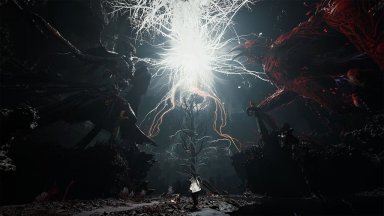



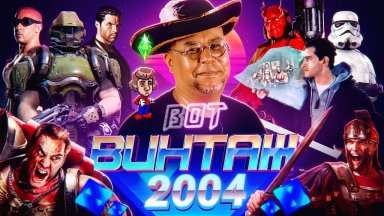

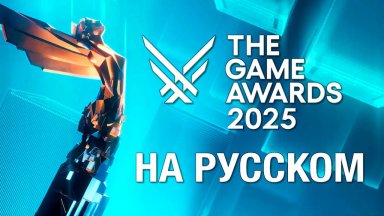


 Рецензия: Reanimal
 Рецензия: Terra Invicta
 Рецензия: Возвращение в Сайлент Хилл
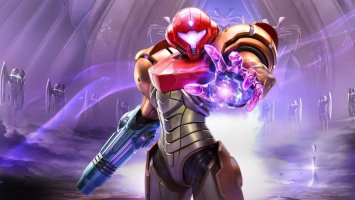 Рецензия: Metroid Prime 4 - Beyond
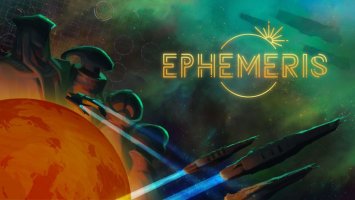 Превью: Ephemeris
 Превью: By Sword & Road
 Превью: Silent Hill - Townfall
 Превью: Kill The Shadow
 Интервью: Командиры бездорожья
 «Впечатлило, насколько реалистичными стали игры» - Интервью с Виталием Дубининым из группы «Ария»
 Интервью: Петя и Волк - Дело об артефакте приключений
 «Хорошую пошаговую игру сделать невероятно тяжело». Интервью с Глебом Дурново
 Игровой ноутбук MSI Katana 17 HX B14W: оружие против кризиса
 Блок питания Premier G1 1000: контролируемая мощь
 БЛОК ПИТАНИЯ MSI MEG Ai1600T PCIE5: ХВАТИТ С ЗАПАСОМ!
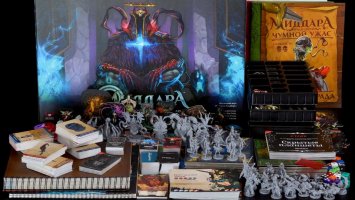 Новинки из мира игр: январь 2026