

Company Logo
Upgrade to Tally.ERP 9 Release 6.6.3

Tally Solution

Suikoden 2 Item Modifier May 2026

Morgan

Senior content writer

Thu Jan 22 2026

However, the practice is not without its critics. Purists argue that using the item modifier eviscerates Suikoden II ’s core theme: that strength comes from community and hard-won alliances. When a player can summon 99 “Water Rune Pieces” (which heal the entire party) at will, the desperate scramble for resources during the game’s infamous “Mercenary Fort” siege loses all meaning. The modifier flattens the game’s dramatic arcs. The emotional weight of receiving a rare “Resurrection Rune” as a gift from a dying ally is nullified if you already have a full stack of them in your inventory. In this view, the modifier is not a tool of empowerment but of narrative self-harm.

The technical simplicity of the modifier invites a peculiar form of creativity. Unlike modern “god mode” cheats that reduce challenge, the Suikoden II modifier functions as a tool for combinatorial alchemy. Players quickly discovered that by injecting the “Gale Rune” (which grants the user the first turn in battle) or multiple “Double-Beat Runes” (which allow a character to strike twice), they could break the turn-order economy entirely. This led to emergent, unintended strategies: equipping the narrative’s tragic hero, Riou, with runes that made him a demigod by Level 20, or arming the cook Hai Yo with weapons capable of one-shotting story-critical bosses. The modifier thus turned the game into a laboratory. The question shifted from “Can I beat this boss?” to “How hilariously, absurdly, can I break this boss?”

Culturally, the persistence of the Suikoden II item modifier speaks to a deeper anxiety within the fandom: the fear of missed content. Because the game features missable characters tied to opaque side-quests (such as recruiting the clown character, Clive, which requires a real-time speedrun), the modifier became a safety net. For a generation of players using emulators in the 2000s, the modifier was the only way to experience the game’s “true” ending without replaying 40 hours of content. In this sense, the item modifier acts as a prosthetic memory. It allows a player to bypass the developer’s draconian timers and fetch-quests, restoring agency to the individual. This aligns with what game scholar Jesper Juul calls the “classic game paradox”—the tension between wanting to master a system and wanting to see all its content. The modifier resolves that paradox by letting players cheat the system to master the narrative.

To understand the modifier’s power, one must first understand the game’s economy of scarcity. Suikoden II famously features 108 recruitable “Stars of Destiny,” many of whom require rare items, specific timing, or vast sums of currency. Items like the “Wind Hat” or the elusive “Double-Beat Rune” are not merely tools; they are keys to unlocking the game’s most challenging secret boss, the Beast Rune. The intended design philosophy is one of delayed gratification and meticulous exploration. The item modifier—accessed via external save editors like Gens Plus! or Suikoden II Save Editor —collapses this economy instantly. By altering a specific memory address (often noted in community forums as a series of two-byte values), a player can replace a lowly Herb with the ultimate “Master Garb” or a “Stat Stone.” This act is not simply cheating; it is a declaration of independence from the game’s temporal constraints.

Ultimately, the Suikoden II item modifier survives as a relic of an era when games were physical, fixed objects, and players were expected to bend them to their will. It is the digital equivalent of a dog-eared page or a margin note. As the game is re-released on modern platforms without such easy memory access, the modifier becomes a ghost in the machine—a memory of a time when hacking a save file was a rite of passage. It reminds us that a game’s “intended experience” is a fragile contract. The modifier offers a counter-covenant: that the player, not the programmer, holds the ultimate right to define what is fun. In the byte-coded loopholes of a 1998 PlayStation RPG, we find a profound, anarchic truth: sometimes, to truly love a masterpiece, you must first be willing to take it apart.

Upgrading to Tally.ERP 9 Release 6.6.3 is fairly simple with Tally Software Services and Support of Penieltech. We urge you to go through the FAQ section before you upgrade!

Upgrade to Tally Prime 7.0

Upgrade to Tally Prime 7.0 with built-in cloud backup, SmartFind discovery, and smarter performance for growing businesses.

Install Tally.ERP 9 Release 6.6.3

● Renew your TSS Subscription (for Tally.ERP 9 users whose TSS has expired). Users with a valid TSS Subscription will be able to use the licensed version of Tally.ERP 9 Release 6.6.3.
● Buy an upgrade (for Tally 9 and lower version users) to start using the licensed version of Tally.ERP 9 Release 6.6.3.
● Download and install Tally.ERP 9 Release 6.6.3. Users currently using any version of Tally.ERP 9 and having a valid TSS Subscription can directly upgrade to Release 6.6.3.
You can also upgrade directly to the latest release from the product.

After Installing

After upgrading to Release 6.6.3, you can choose to start working with Tally.ERP 9 in one of the following ways:

Open your existing company in Release 6.6.3 and continue your business as usual

This is the simplest option. Open your company in Tally.ERP 9 Release 6.6.3 and follow the on-screen instructions. Once the data is converted, get started with GCC VAT (for Gulf countries) as required.
● For Tally 7.2 or lower, download the tool Tally72migration.exe , and migrate your data using this tool. After the upgrade, you can open your data in Release 6.6.3.

Open your existing company in Release 6.6.3 and split your company

Open your company in Tally.ERP 9 Release 6.6.3 and follow the on-screen instructions. Then, split your company.
● For Tally 7.2 or lower, download the tool Tally72migration.exe , and migrate your data using this tool. After the upgrade, you can open your data in Release 6.6.3, and split the company.

Create a new company in Release 6.6.3 and start afresh for GST or GCC VAT

● Go to Company Info. > Create Company . Create all the required masters.
Or
● Export the masters from your company in the older version of Tally Prime with the closing balances, as applicable. In the new company in Release 6.6.3, import these masters. Once the masters are imported, you can get started with GCC VAT.
Enjoy your journey with Tally.ERP 9! and Tally Software Services with Penieltech.

Related Articles

Explore more insights, ideas, and practical knowledge from our latest writings.

Suikoden 2 Item Modifier May 2026

However, the practice is not without its critics. Purists argue that using the item modifier eviscerates Suikoden II ’s core theme: that strength comes from community and hard-won alliances. When a player can summon 99 “Water Rune Pieces” (which heal the entire party) at will, the desperate scramble for resources during the game’s infamous “Mercenary Fort” siege loses all meaning. The modifier flattens the game’s dramatic arcs. The emotional weight of receiving a rare “Resurrection Rune” as a gift from a dying ally is nullified if you already have a full stack of them in your inventory. In this view, the modifier is not a tool of empowerment but of narrative self-harm.

The technical simplicity of the modifier invites a peculiar form of creativity. Unlike modern “god mode” cheats that reduce challenge, the Suikoden II modifier functions as a tool for combinatorial alchemy. Players quickly discovered that by injecting the “Gale Rune” (which grants the user the first turn in battle) or multiple “Double-Beat Runes” (which allow a character to strike twice), they could break the turn-order economy entirely. This led to emergent, unintended strategies: equipping the narrative’s tragic hero, Riou, with runes that made him a demigod by Level 20, or arming the cook Hai Yo with weapons capable of one-shotting story-critical bosses. The modifier thus turned the game into a laboratory. The question shifted from “Can I beat this boss?” to “How hilariously, absurdly, can I break this boss?” suikoden 2 item modifier

Culturally, the persistence of the Suikoden II item modifier speaks to a deeper anxiety within the fandom: the fear of missed content. Because the game features missable characters tied to opaque side-quests (such as recruiting the clown character, Clive, which requires a real-time speedrun), the modifier became a safety net. For a generation of players using emulators in the 2000s, the modifier was the only way to experience the game’s “true” ending without replaying 40 hours of content. In this sense, the item modifier acts as a prosthetic memory. It allows a player to bypass the developer’s draconian timers and fetch-quests, restoring agency to the individual. This aligns with what game scholar Jesper Juul calls the “classic game paradox”—the tension between wanting to master a system and wanting to see all its content. The modifier resolves that paradox by letting players cheat the system to master the narrative. However, the practice is not without its critics

To understand the modifier’s power, one must first understand the game’s economy of scarcity. Suikoden II famously features 108 recruitable “Stars of Destiny,” many of whom require rare items, specific timing, or vast sums of currency. Items like the “Wind Hat” or the elusive “Double-Beat Rune” are not merely tools; they are keys to unlocking the game’s most challenging secret boss, the Beast Rune. The intended design philosophy is one of delayed gratification and meticulous exploration. The item modifier—accessed via external save editors like Gens Plus! or Suikoden II Save Editor —collapses this economy instantly. By altering a specific memory address (often noted in community forums as a series of two-byte values), a player can replace a lowly Herb with the ultimate “Master Garb” or a “Stat Stone.” This act is not simply cheating; it is a declaration of independence from the game’s temporal constraints. The modifier flattens the game’s dramatic arcs

Ultimately, the Suikoden II item modifier survives as a relic of an era when games were physical, fixed objects, and players were expected to bend them to their will. It is the digital equivalent of a dog-eared page or a margin note. As the game is re-released on modern platforms without such easy memory access, the modifier becomes a ghost in the machine—a memory of a time when hacking a save file was a rite of passage. It reminds us that a game’s “intended experience” is a fragile contract. The modifier offers a counter-covenant: that the player, not the programmer, holds the ultimate right to define what is fun. In the byte-coded loopholes of a 1998 PlayStation RPG, we find a profound, anarchic truth: sometimes, to truly love a masterpiece, you must first be willing to take it apart.
erp-implementation-partner
ERP Application

Best ERP implementation partner in the UAE

Morgan07 Mar 2026
odoo-erp-business-protection-uae
Odoo ERP

From Missile Defense to Business Defense: How Odoo Protects UAE

Fahad07 Mar 2026
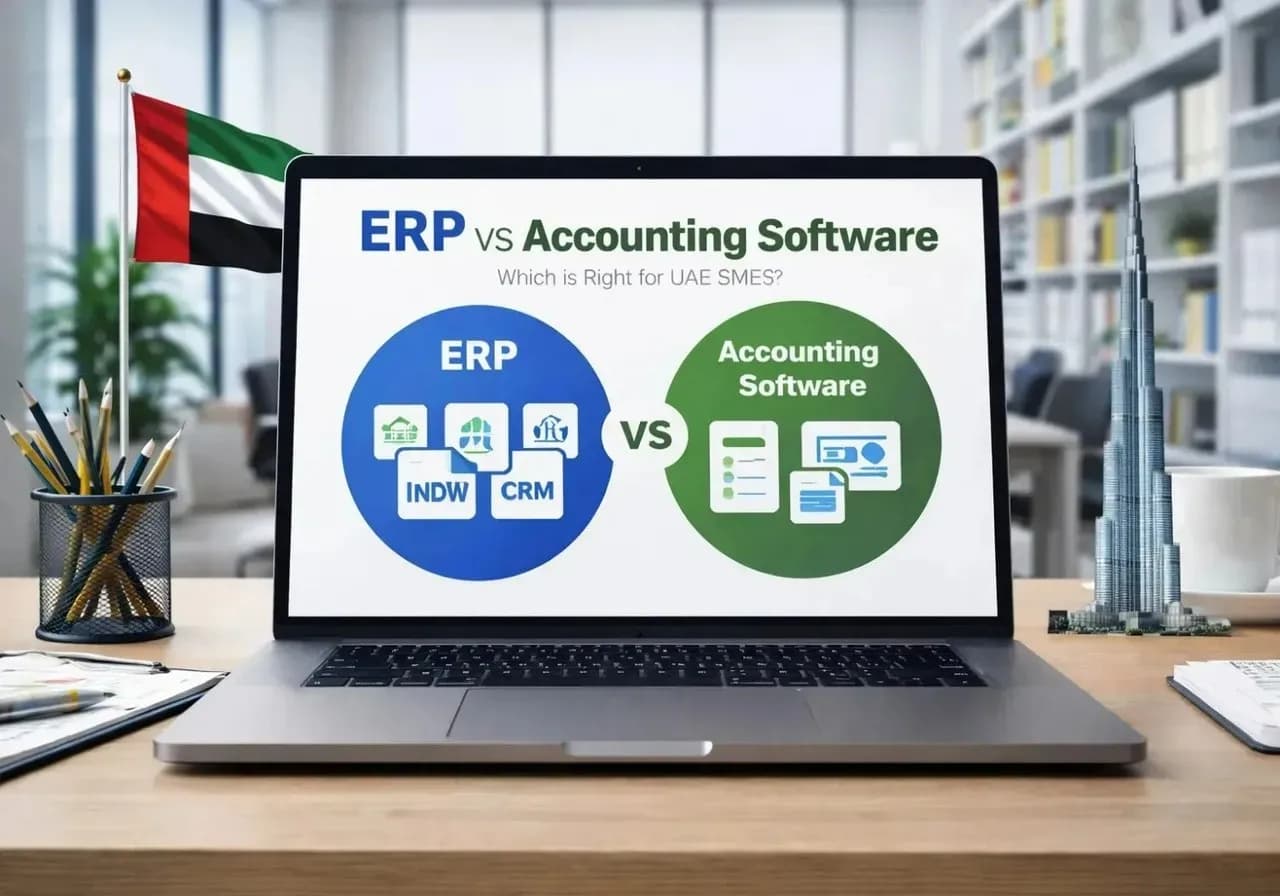
ERP-vs-Accounting-Software-in-UAE-for-SMEs
ERP and Accounting Software

ERP vs Accounting Software in UAE: Which Is Better for SMEs?

Lisa06 Mar 2026