Dhaka-Facts
    - Good to know
    unlawful entry subtitles

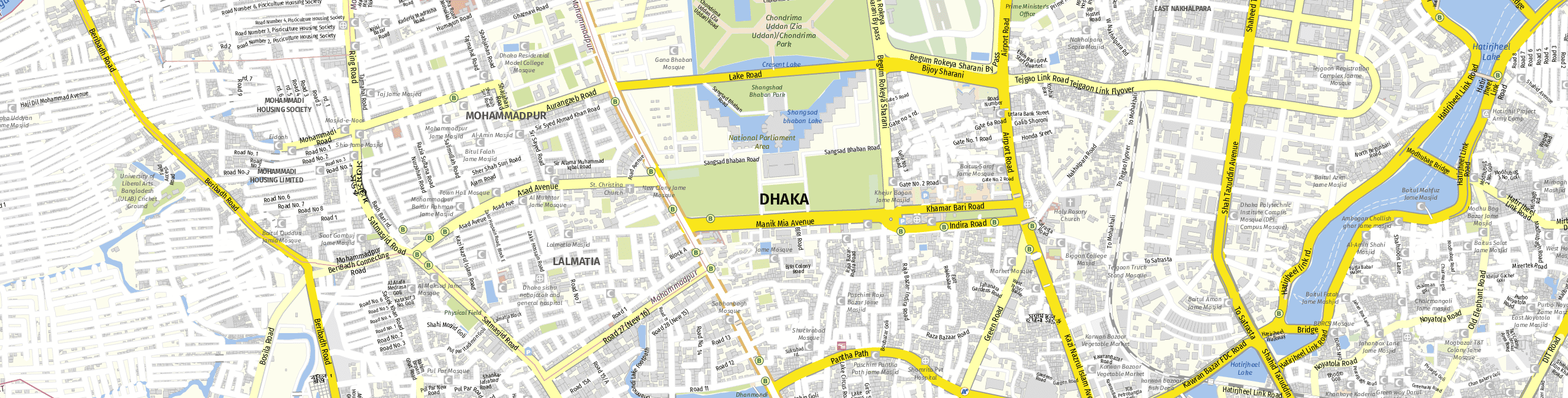
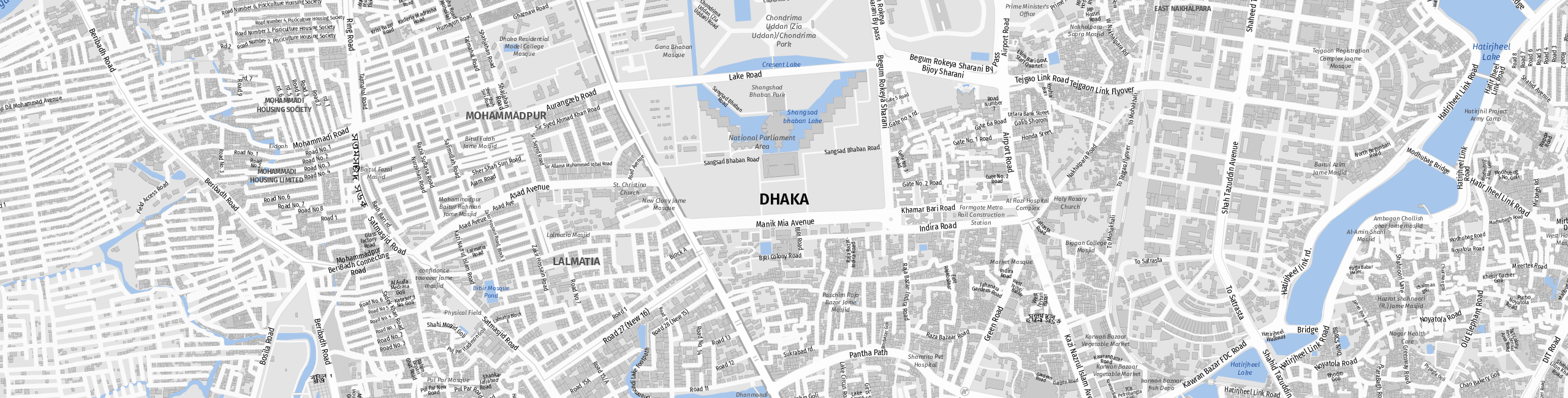
    Our city map of Dhaka (Bangladesh) shows 29,650 km of streets and paths. If you wanted to walk them all, assuming you walked four kilometers an hour, eight hours a day, it would take you 927 days. And, when you need to get home there are 801 bus and tram stops, and subway and railway stations in Dhaka.

    With a total area of 6 square kilometers, public green spaces and parks make up 0.029% of Dhaka’s total area, 20,413 square kilometers. That means each of Dhaka’s 21,741,000 residents has an average of 0.3 square meters.

    When people in Dhaka want to go out, they are spoilt for choice; our map shows more than 115 cafés, restaurants, bars, ice-cream parlors, beer gardens, cinemas, nightclubs and theatres. The city also boasts more than 252 sights and monuments, and far more than 9,979 retailers. Feeling tired? Our map shows more than 395 hotels and guest houses, where you can rest.


    • Map download service

      City, regional and country maps from Kober-Kuemmerly+Frey can be generated with the optimum print or screen resolution for every application. Use our maps in your image brochures and travel catalogues, or on your website. Or add an attractive location map to your real estate flyer. unlawful entry subtitles

    The following companies use maps from mapz.com

    • Marlit-Christine Heinersdorff
      LOOXX* magazine
      Thanks to mapz.com, the service city map in our LOOXX* magazine uses our corporate colors. Brilliant!
    • Dieter C. Rangol
      German Swimming Pool Federation
      mapz.com gives our member companies rapid, easy access to professionally designed location maps for their websites, brochures and catalogues.
    • Daniel Tolksdorf
      Aengevelt Real Estate
      mapz.com offers the best looking maps for our high-quality real estate flyers.
    • Silja Schelp
      Humboldt Travel
      mapz.com helps us create attractive maps showing the special features of our tours, anywhere in the world.

    Unlawful Entry Subtitles 〈FHD 2026〉

    So the next time you watch a home invasion film, turn on the subtitles—even in your native tongue. Look at the white text crawling across the bottom of the screen like a silent burglar. And ask yourself: Who is the real intruder? The man with the crowbar, or the translation that tells you what he is thinking?

    Ultimately, the subtitle itself is an act of unlawful entry. It intrudes upon the frame. It superimposes a foreign language over the director’s composition. It breaks the fourth wall not with artistry, but with necessity. We, as viewers, never gave the subtitle permission to be there. Yet we accept it. We read it. We allow it to redefine our reality.

    In the international streaming era, where a Korean thriller like Door Lock (2018) is watched by a Brazilian audience via English subtitles, the concept of “unlawful entry” becomes a nomadic signifier. A woman in São Paulo reads: “Ele está dentro do apartamento.” (He is inside the apartment.) She gasps. She has never been to Seoul. She does not know Korean law. But the subtitle has successfully committed an act of unlawful entry into her psyche. It has crossed the border of her attention without permission.

    Consider the cinematic thriller Unlawful Entry (1992), directed by Jonathan Kaplan and starring Kurt Russell, Ray Liotta, and Madeleine Stowe. The film’s title is a double-edged sword. On its surface, it refers to the home invasion by Liotta’s character, a rogue LAPD officer who uses his badge to bypass the sanctity of a private home. But on a deeper level, the “unlawful entry” is psychological—the intrusion of paranoia, the violation of the domestic sphere. Now, imagine watching this film in a language not your own. You are reliant on subtitles. The English dialogue—sharp, tense, laced with subtext—is compressed into two lines of white text on a dark screen. How does one translate not just the words, but the crime of the words?

    How does a subtitle translate a shush? It doesn’t. It cannot. The subtitle disappears. In that white space—that void between two lines of dialogue—the audience is left alone with the universal language of fear. No Cyrillic, no Mandarin characters, no Arabic script can improve upon the silence of an intruder. The subtitle’s absence becomes the most accurate translation of all: the recognition that some entries are unlawful not because of what is said, but because of what is deliberately withheld.