-






 i - BILLING MASTERInstant Customer SupportReliable Biz AnalyticsRevolutionary Business Analysis Software


Abstract: Vijayasanthi, a name synonymous with power and resilience in Telugu cinema, transcended the traditional boundaries of a film actress to become a significant cultural symbol. This paper analyzes the evolution of Vijayasanthi’s “entertainment content,” tracing her journey from a romantic heroine to an iconic “action queen.” It further examines her subsequent transition into active politics and how this trajectory has shaped her representation in popular media, including film, journalism, and digital platforms. The paper argues that Vijayasanthi’s enduring relevance lies not merely in her filmography but in her performance of a unique, hybrid gender identity that challenged established norms of femininity in Indian popular culture. 1. Introduction: The Star as Content In the landscape of Indian popular media, the film star is rarely confined to the cinema screen. The star’s image—comprising their on-screen roles, off-screen persona, political affiliations, and philanthropic activities—constitutes a fluid body of “entertainment content” consumed by audiences across various media. Vijayasanthi (born 1966) represents a fascinating case study in this phenomenon. Active primarily in Telugu cinema (Tollywood) from the early 1980s to the mid-2000s, she engineered a radical reinvention that defied the archetypal career arc of a leading lady. From a demure, romantic interest, she transformed into a formidable, mustachioed action hero, a genre typically reserved for male stars. This paper posits that this transformation created a new genre of “female-centric action content,” which, in turn, fueled her second act as a mass political leader. Her journey illustrates how entertainment content is not static but is actively constructed, negotiated, and repurposed across the interconnected domains of cinema, politics, and digital media. 2. The Genesis of an Image: From Romantic Heroine to Action Icon (1980s-1990s) Vijayasanthi’s initial filmography aligned with conventional gender roles. Debuting as a child artist and later as a leading lady opposite stars like Akkineni Nageswara Rao and Chiranjeevi, she played roles defined by sacrifice, beauty, and emotional vulnerability. However, the late 1980s marked a pivotal shift. Films like Kartavyam (1990, dubbed into Hindi as Tejaswini ) and Gang Leader (1991) began placing her in roles requiring physical prowess.

Instant Voice and Online Support to resolve the issues & doubts in the software.

Can be learned in just 20 minutes training even if you are unaware of using computer.

Simplifies complex billing and related business processes with utmost easiness.

Graphical & Analytical reports for better business improvement plans.
We develop customized solutions for your Business after analysing your business operations and ensure excellent business flow.

Easy ERP

Simple Billing

Accurate Reports

Smart Operations
Abstract: Vijayasanthi, a name synonymous with power and resilience in Telugu cinema, transcended the traditional boundaries of a film actress to become a significant cultural symbol. This paper analyzes the evolution of Vijayasanthi’s “entertainment content,” tracing her journey from a romantic heroine to an iconic “action queen.” It further examines her subsequent transition into active politics and how this trajectory has shaped her representation in popular media, including film, journalism, and digital platforms. The paper argues that Vijayasanthi’s enduring relevance lies not merely in her filmography but in her performance of a unique, hybrid gender identity that challenged established norms of femininity in Indian popular culture. 1. Introduction: The Star as Content In the landscape of Indian popular media, the film star is rarely confined to the cinema screen. The star’s image—comprising their on-screen roles, off-screen persona, political affiliations, and philanthropic activities—constitutes a fluid body of “entertainment content” consumed by audiences across various media. Vijayasanthi (born 1966) represents a fascinating case study in this phenomenon. Active primarily in Telugu cinema (Tollywood) from the early 1980s to the mid-2000s, she engineered a radical reinvention that defied the archetypal career arc of a leading lady. From a demure, romantic interest, she transformed into a formidable, mustachioed action hero, a genre typically reserved for male stars. This paper posits that this transformation created a new genre of “female-centric action content,” which, in turn, fueled her second act as a mass political leader. Her journey illustrates how entertainment content is not static but is actively constructed, negotiated, and repurposed across the interconnected domains of cinema, politics, and digital media. 2. The Genesis of an Image: From Romantic Heroine to Action Icon (1980s-1990s) Vijayasanthi’s initial filmography aligned with conventional gender roles. Debuting as a child artist and later as a leading lady opposite stars like Akkineni Nageswara Rao and Chiranjeevi, she played roles defined by sacrifice, beauty, and emotional vulnerability. However, the late 1980s marked a pivotal shift. Films like Kartavyam (1990, dubbed into Hindi as Tejaswini ) and Gang Leader (1991) began placing her in roles requiring physical prowess.
i-Billing Master is the complete GST Enabled Billing solution for all type of industries. For experiencing the ultimate hassle-free billing process, try the Free Demo Installation of i-Billing Master!!
Call 7558888855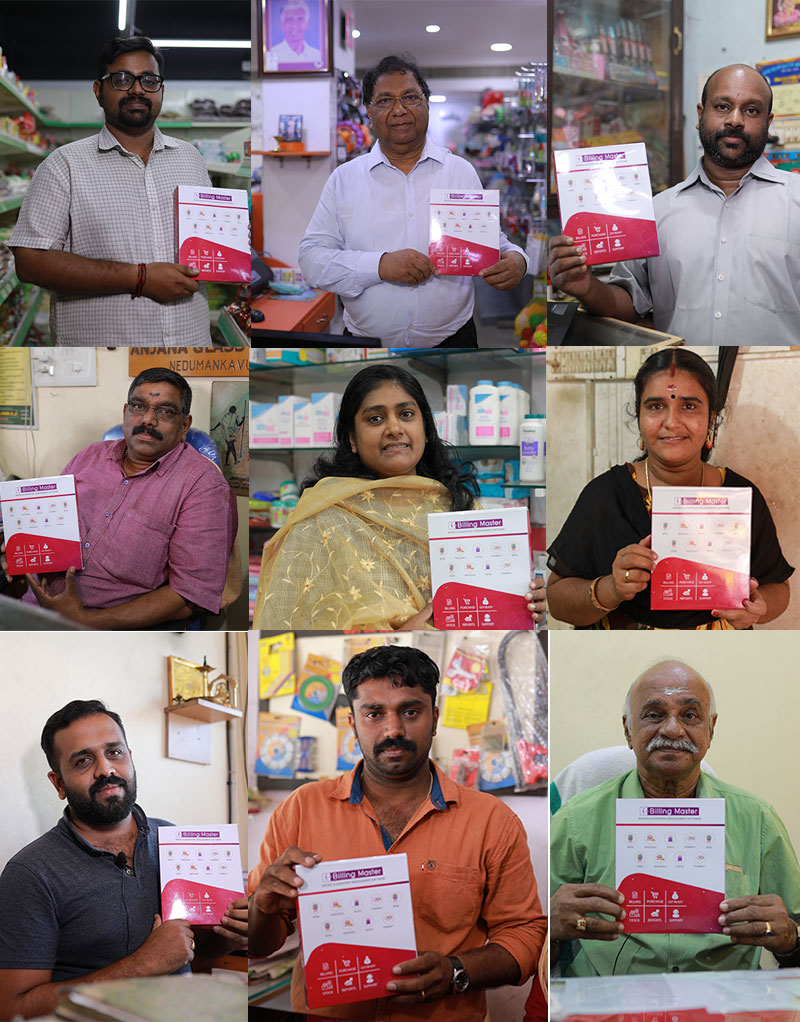










i-Billing Master Free Demo
Do your business operation is complicated with large volume of Inventory and product life cycle lies over production units, stockists and multiple stores? i-Billing Master allows complete control on your entangled business operation.
Inspironz IT Solutions, 11/948, 2nd Floor Kochumelathil Building, Arumurikkada, Kollam, Kerala, India.
+91 755 888 8855 / +91 755 888 855