
Television, now rebranded as "prestige drama," has become the novel of the 21st century. The limited series has emerged as the dominant form—a tight, eight-to-ten-hour commitment that respects a viewer’s time more than the 22-episode network procedurals of yesteryear. Shows like Succession , The Last of Us , and Beef demonstrate that the small screen is where the most complex character studies and risk-taking narratives now reside. However, this abundance has created a new anxiety: the "content pile-up." With every studio launching its own service (Disney+, Max, Peacock, Paramount+), the act of discovery has become exhausting. Viewers are abandoning the hunt, retreating to the comfort of nostalgic re-watches of The Office or Friends rather than investing emotional energy into a new universe.
On the film front, the cinematic experience is fighting for its life against the convenience of the home theater. While franchise juggernauts like Oppenheimer and the Spider-Verse sequels prove that theatrical spectacle can still command a global audience, streaming platforms like Netflix, Apple TV+, and Amazon Prime have redefined what a "movie" can be. They have become the primary incubators for mid-budget dramas, romantic comedies, and auteur-driven passion projects that studios no longer risk releasing in a summer crowded by superheroes. The result is a bifurcated reality: one where we mourn the death of the "movie star" while simultaneously enjoying a golden age of high-quality, accessible storytelling from global creators. Vixen.17.01.25.Eva.Lovia.My.Celebrity.Crush.XXX...
In the current landscape of popular media, the traditional boundaries between film, television, music, and digital content have not just blurred—they have effectively dissolved. The "watercooler moment" of the 20th century, where a single episode of a broadcast show dominated the next day’s conversation, has been replaced by the relentless, fragmented churn of the streaming era. Today, entertainment is less about a shared schedule and more about a shared algorithm. Television, now rebranded as "prestige drama," has become
Simultaneously, the music industry has been fundamentally restructured by the short-form video engine. TikTok is no longer merely a promotional tool; it is the primary A&R department for the entire business. A song’s success is now predicated on its ability to function as a 15-second sound bite—a dance challenge, a meme template, or a "POV" audio clip. This has democratized the charts, allowing obscure bedroom pop artists and resurrected 90s deep cuts to go viral overnight. Yet, it has also truncated the listening attention span. The album as a cohesive artistic statement is becoming a relic for purists, replaced by the algorithmic "discovery mix" designed to keep the dopamine hits flowing without a single moment of silence. However, this abundance has created a new anxiety:
Finally, there is the evolution of fandom itself. Popular media is no longer consumed; it is participated in . The line between creator and consumer is now a dotted line. Viewers watch a Netflix documentary about a scammer, then immediately download a podcast dissecting the documentary, then scroll through Reddit threads arguing about the morality of the subjects, before finally watching a YouTuber react to the entire saga. This "meta-layer" of commentary—the recap, the breakdown, the fan theory video—has become as popular as the original text. In this environment, Star Wars and Marvel aren't just franchises; they are ecosystems of perpetual analysis. The entertainment isn't just the story on screen; it is the community's endless discussion about the story.
In essence, popular culture has become a vast, interconnected labyrinth. We are drowning in abundance, yet united by a collective FOMO (Fear Of Missing Out). Whether it is a blockbuster film, a bingeable drama, or a viral pop single, the core of entertainment remains the same: it is the shared language we use to understand our chaotic world, even if we are speaking that language in separate comment sections and private Discord servers.
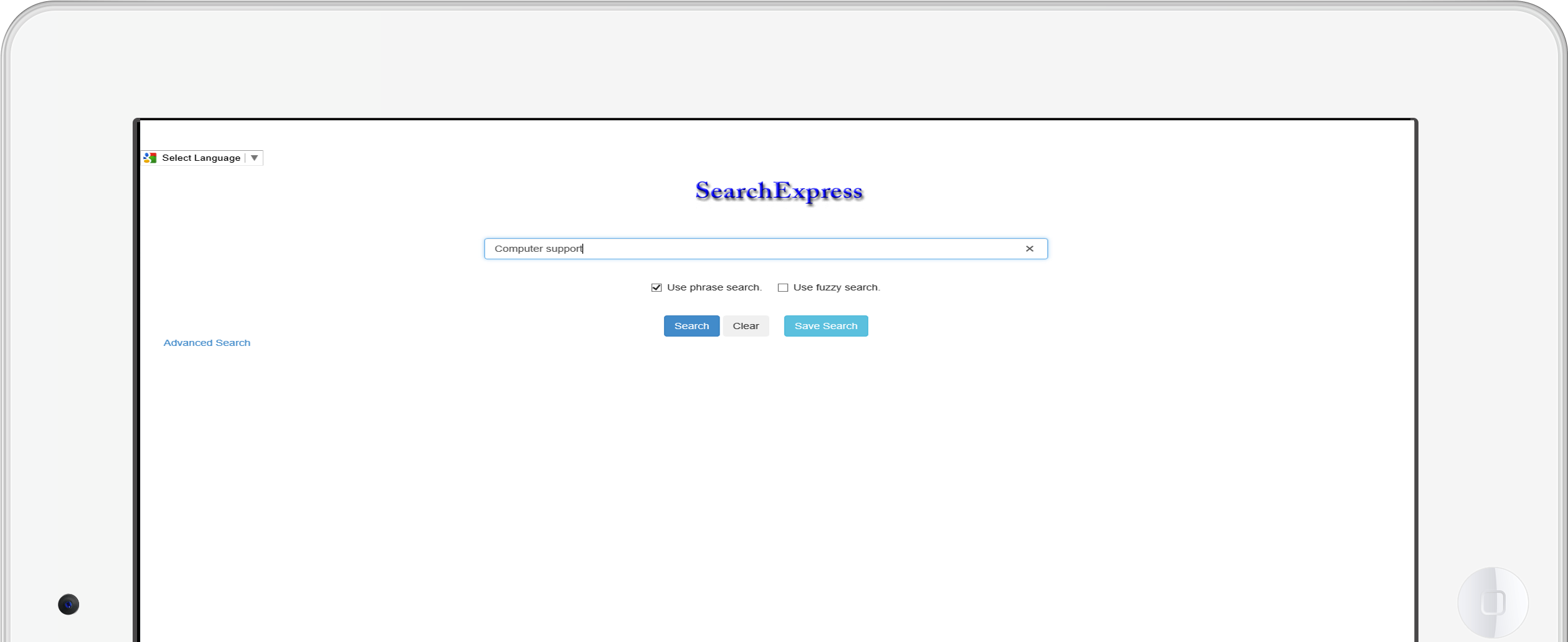
SearchExpress document scanning capability lets you capture, index, route, and search your scanned documents as well as your digital documents.
You can scan documents with any TWAIN compliant scanner, or use an MFP copier.
Enhance productivity through automated task delegation for efficient approval and completion.
For instance, SearchExpress can intelligently distribute invoices to appropriate managers for approval.
Managers can conveniently approve invoices using their web browsers or dedicated smartphone applications.
SearchExpress ensures seamless information exchange between your decision-makers, regardless of location or device.
The SearchExpress document management software enables seamless workflow integration for PDFs, Word, Excel, audio, and video files
For more workflow features, click here.
Use our Smartphone Approval App to approve invoices.
Use our Smartphone Receipt App to take a photo of receipts.
For Document Management search features, click here.
For document capture and indexing features, click here.