
LuppetX is a tracking system for 3D Virtual YouTubers
that only requires a web camera and LeapMotion
LuppetX is a tracking system for 3D Virtual YouTubers
that only requires a web camera and LeapMotion

Specialized in upper body expression, various ingenuities are incorporated so that the character moves lively with just two devices.

Just hang the LeapMotion on your neck and point the camera at yourself.
It is developed with the aim of being used by a non-computer-savvy streamer alone.

You can move the character by simply converting the 3D model to VRM.
It also supports the latest VRM standards (VRM1.0).

We have prepared documentation to solve various questions such as preparing 3D models and devices, and how to use LuppetX.
“Luppet”, the predecessor of LuppetX, has been supporting VTubers’ broadcasts worldwide since its release in February 2019.
And thanks to the feedback from our users, various updates have been made.
It is designed to allow anyone to become a VTuber by minimizing the necessary equipment and preparation, even if they are not very familiar with computers.
Please watch the video.
While keeping the concepts and features of the conventional Luppet intact, we have redesigned everything from scratch.
In X, based on Luppet, we have added features such as ‘Accessory function’, ‘Motion transmission to external applications’, ‘Transparent background’, and ‘Behavior improvements during tracking loss’.
In addition to these, we have improved memory usage and GPU load compared to before.
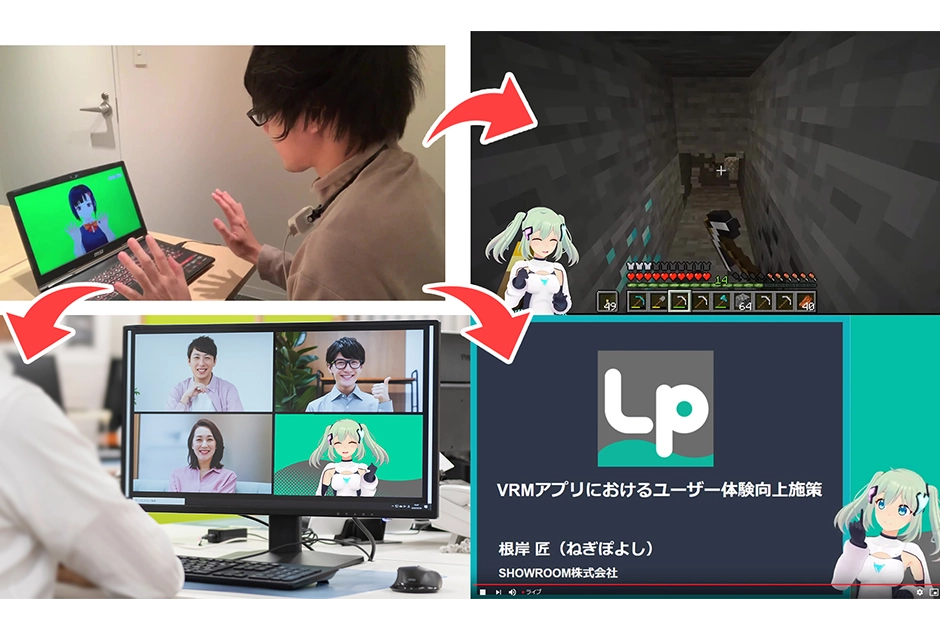
From Game Streaming to Remote Meetings
We expect it to be used for chat streaming and game streaming using OBS.
On the other hand, it can also be used for things like remote meetings and presentations using avatars.
By purchasing a license, you can use it for commercial purposes regardless of whether you are an individual or a corporation.
As of May 2023, Luppet is used by more than 100 companies worldwide and over 13,000 individual VTubers.









For decades, the phrase "Made in Japan" conjured images of reliable cars and high-tech robotics. But in the 21st century, Japan’s most potent export isn't hardware—it's culture. From the neon-lit arcades of Akihabara to the global dominance of streaming charts, the Japanese entertainment industry has evolved into a multi-billion dollar ecosystem that shapes how the world consumes stories, music, and art.
Japanese game design often prioritizes "mastery" and "rules" over pure simulation. The concept of Shoshin (初心, beginner’s mind) is embedded in games like The Legend of Zelda , where curiosity is rewarded over violence. Furthermore, the rise of VTubers (Virtual YouTubers) represents a uniquely Japanese solution to digital identity—allowing entertainers to perform via anime avatars, blending privacy with performance. Traditional Culture in a Modern Wrapper One of the industry's most striking features is its ability to modernize ancient aesthetics. Horror films like The Ring and Ju-On didn't just use jump scares; they imported the logic of Kabuki theater and Noh masks—slow, deliberate movements and the terror of the unseen. Watch JAV Subtitle Indonesia - Page 20 - INDO18
Anime has changed Western storytelling. Unlike Saturday morning cartoons in the U.S., anime assumes an intelligent audience, often dealing with existential dread, philosophical ethics, or historical trauma. It has also fueled a massive tourism boom, with fans traveling to "pilgrimage sites" (locations featured in shows like Your Name ). 2. J-Pop and the Idol System While K-Pop currently dominates global charts, J-Pop laid the groundwork for the modern "factory" model of pop music. Groups like AKB48 and Arashi perfected the "idol" concept—performers who are marketed not just for their music, but for their perceived personality, approachability, and "growth." For decades, the phrase "Made in Japan" conjured
However, beneath the glittering surface of J-Pop idols and Oscar-winning anime lies a complex industry defined by fierce tradition, technological innovation, and a unique set of cultural values that often baffle Western observers. 1. Anime: The Flagship Export Once a niche hobby for "otaku" (geeks), anime is now mainstream. With global hits like Demon Slayer: Mugen Train (the highest-grossing film of 2020 globally) and Attack on Titan , the industry reported revenues exceeding ¥3 trillion (approx. $20 billion USD) in recent years. Japanese game design often prioritizes "mastery" and "rules"
The Japanese word oshi (推し), meaning "my favorite," defines the fan-artist relationship. Fans don't just listen; they "support" their idols through voting, purchasing multiple copies of singles, and attending "handshake events." This creates a hyper-loyal, economically robust fanbase that contrasts sharply with the distant celebrity culture of the West. 3. Video Games: From Mario to Metaphor Japan is the undisputed birthplace of the modern console industry. Nintendo, Sony, and Sega transformed post-war toy companies into interactive giants. Today, Japanese games range from the blockbuster ( Final Fantasy ) to the avant-garde ( Death Stranding ).

Please install according to the instructions in the installer.

Membership registration is required to use LuppetX.
Please set up your account.

The license applies immediately after purchase
and LuppetX becomes fully usable.